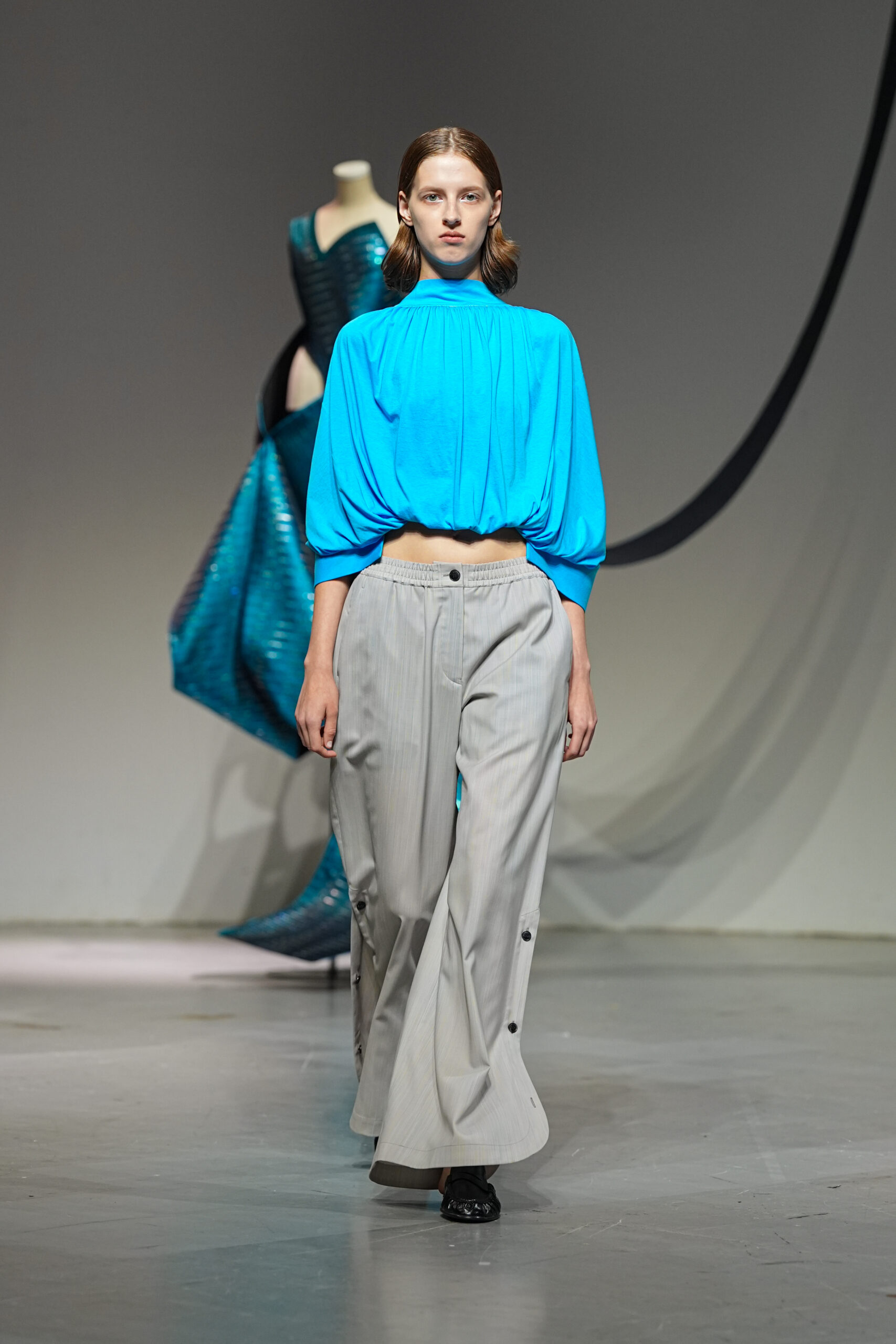
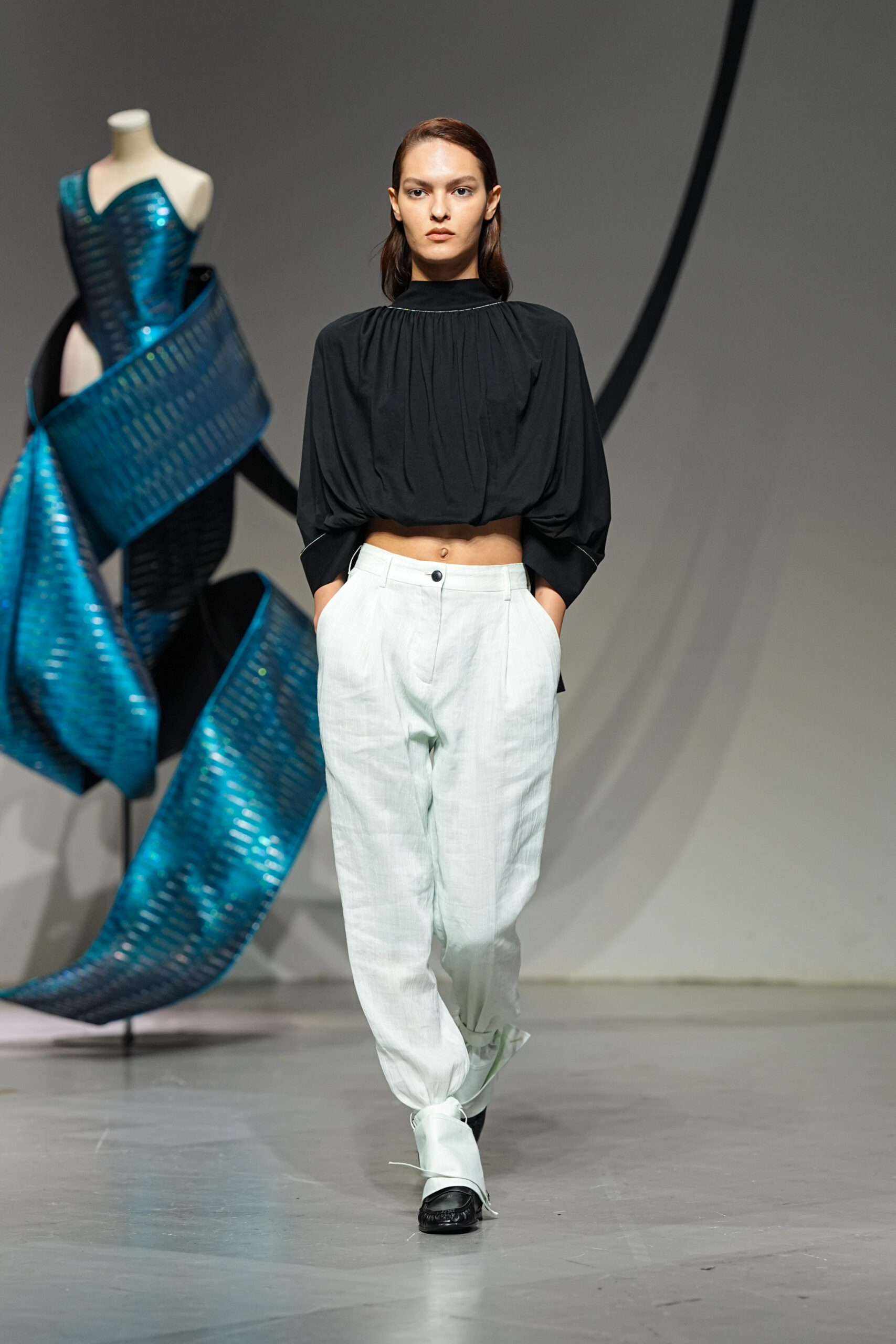
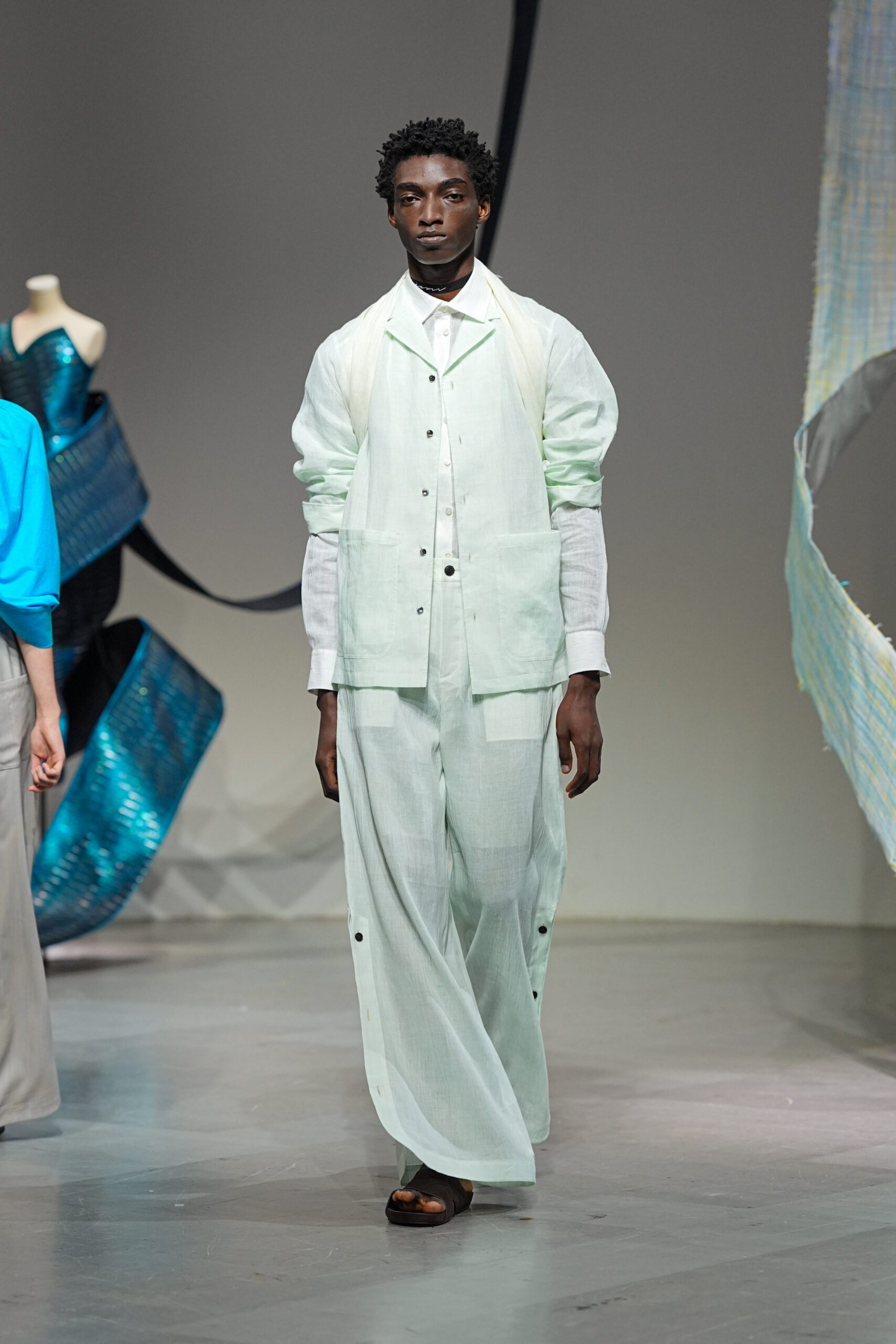
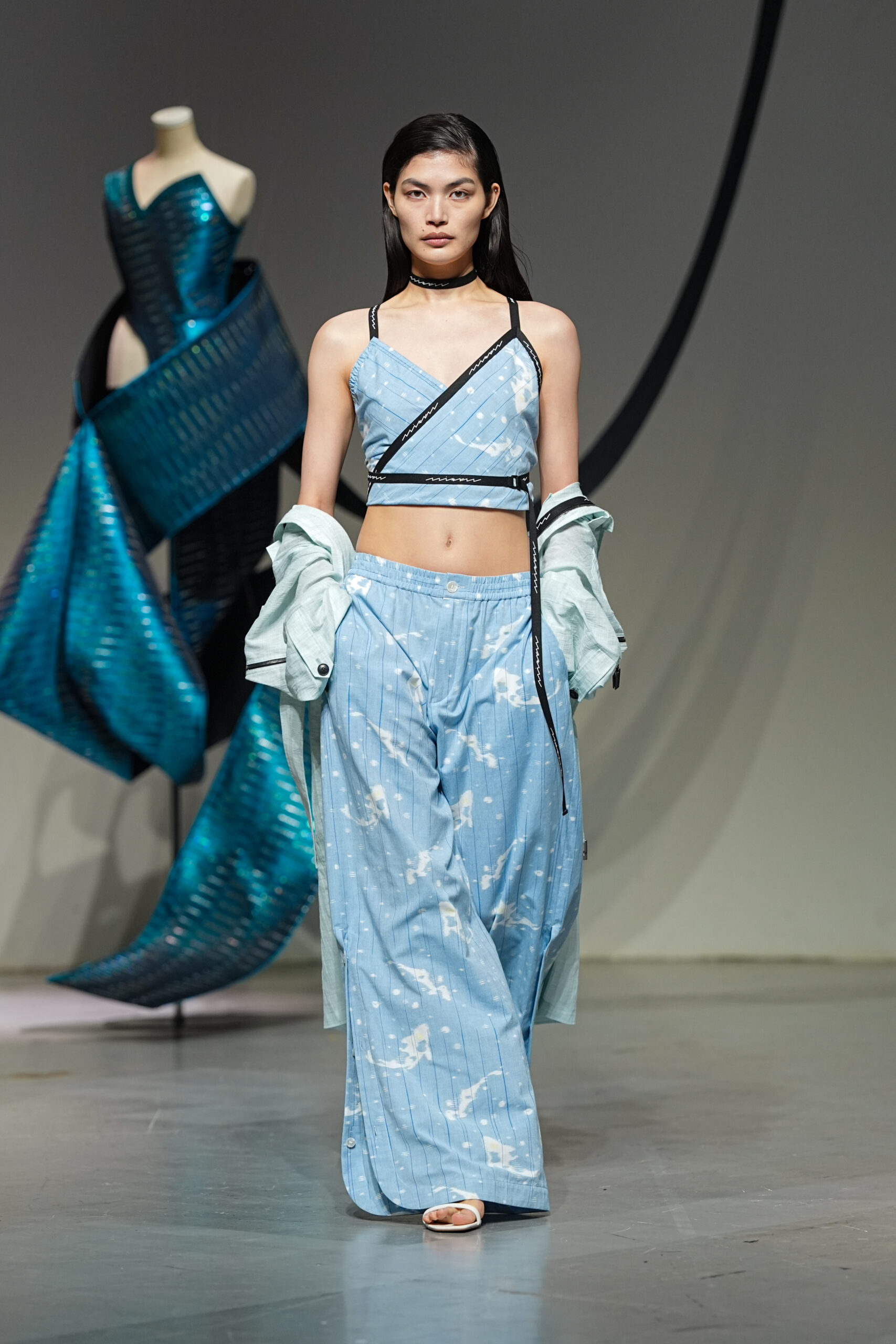
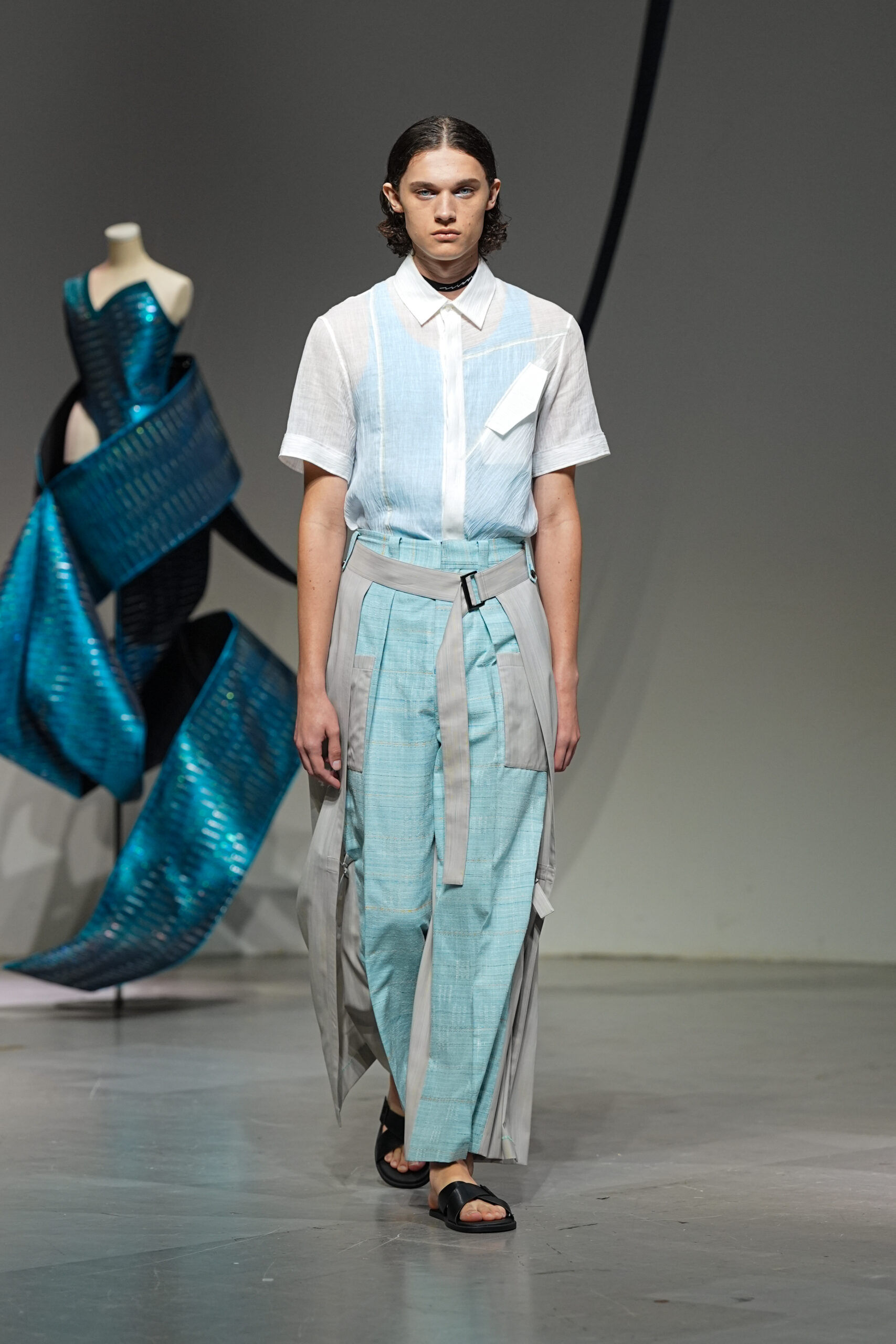
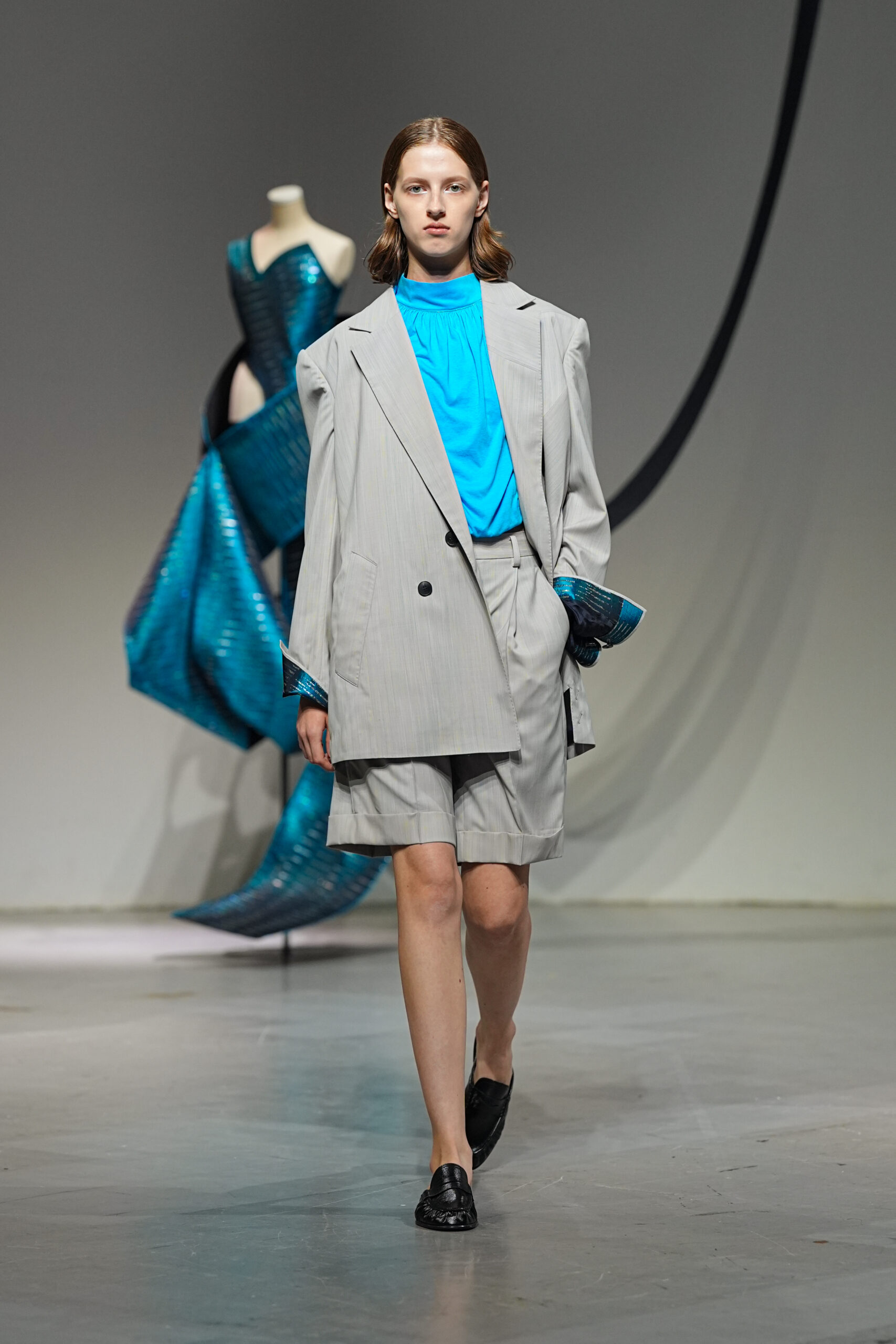
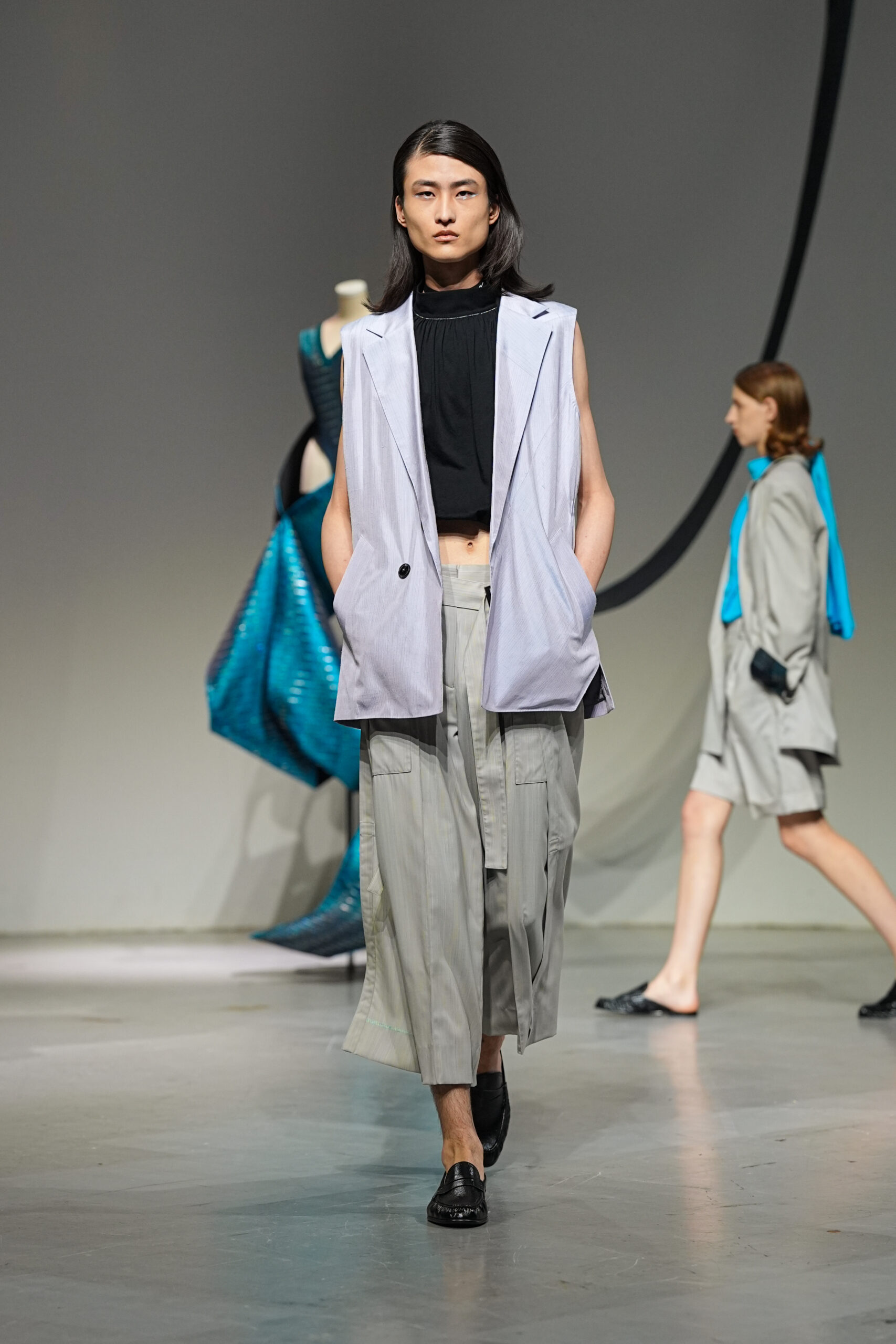
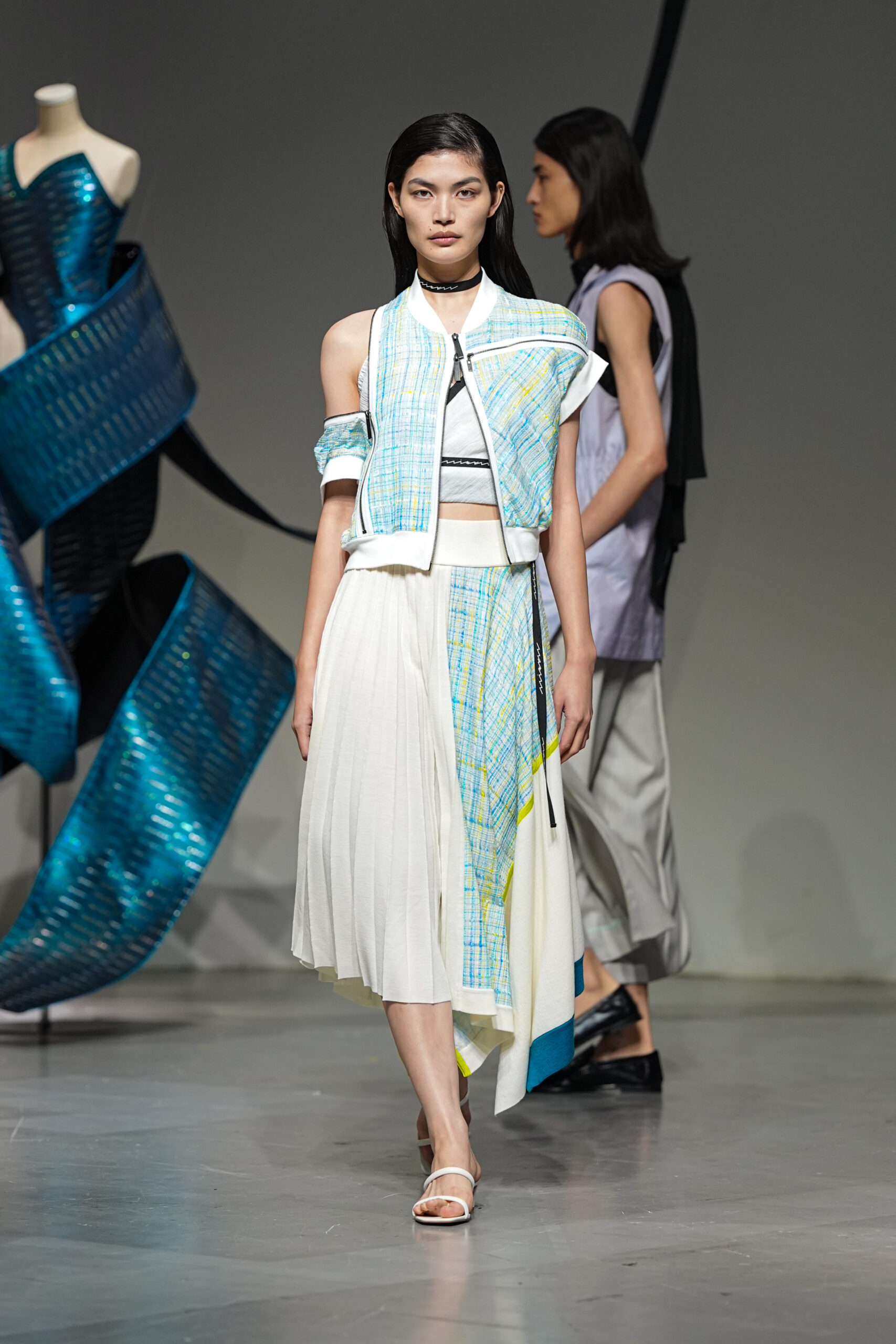
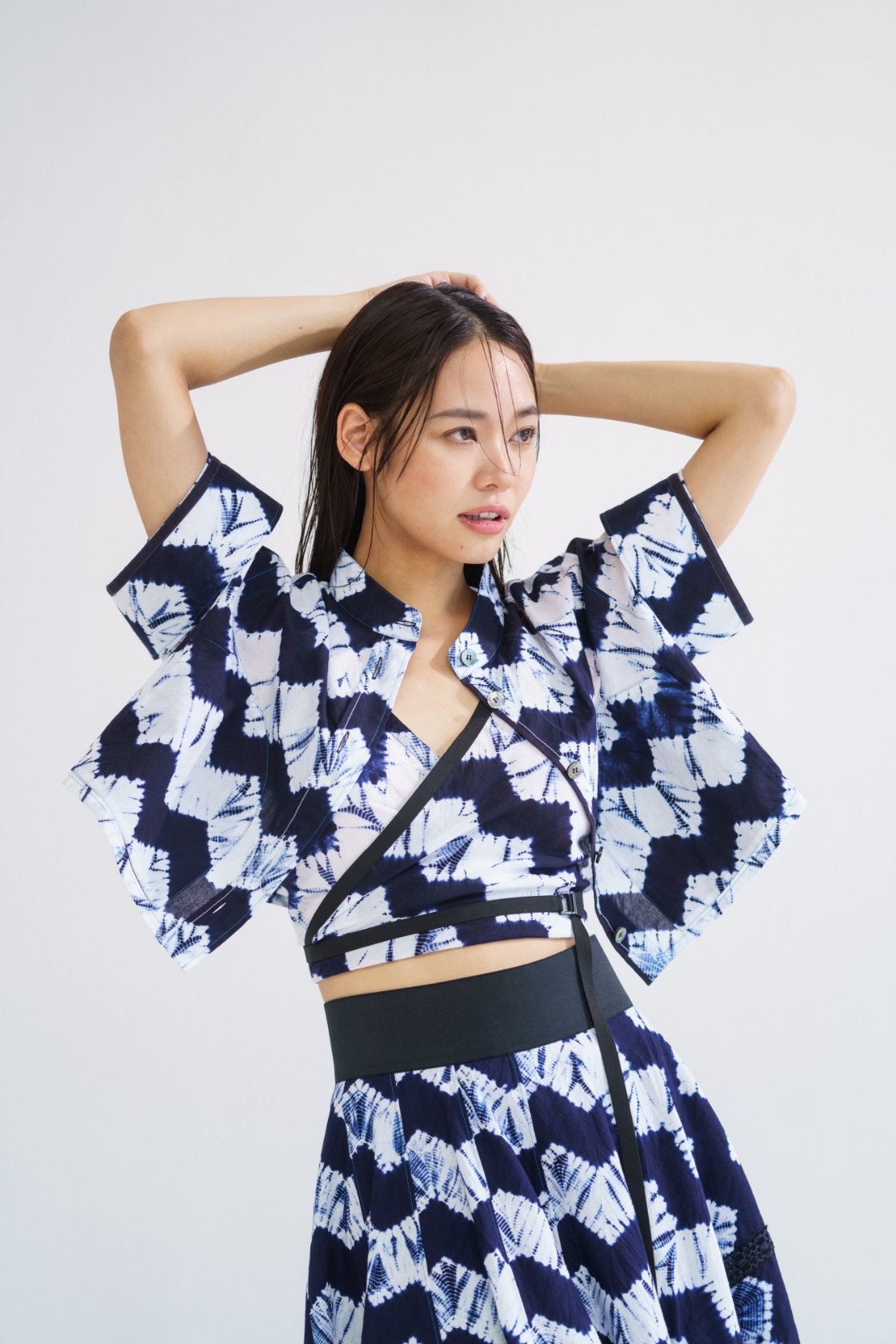
2027 S/S
"WHAT 38CM TELLS"
"WHAT 38CM TELLS"
Kimono have a fixed form, with the width of their fabric standardized across Japan.
38 centimeters. Approximately one-quarter the width of a conventional garment textile.
That narrowness should have been a serious constraint for any fashion designer.
And yet, there is a reason MIZEN remains devoted to kimono as a medium.
It is the relationship between "the designer" and "the artisan."
In the world of fashion, the designer's vision takes center stage, while the artisan's technique exists to support and realize that vision.
In the world of kimono, by contrast, the beauty born from the artisan's technique is what stands at the very center of value.
Not kimono as material — but this relationship itself, one we wish to weave into fashion.
Could technique ever become the protagonist?
Could fashion and kimono — these two worlds — ever truly meet?
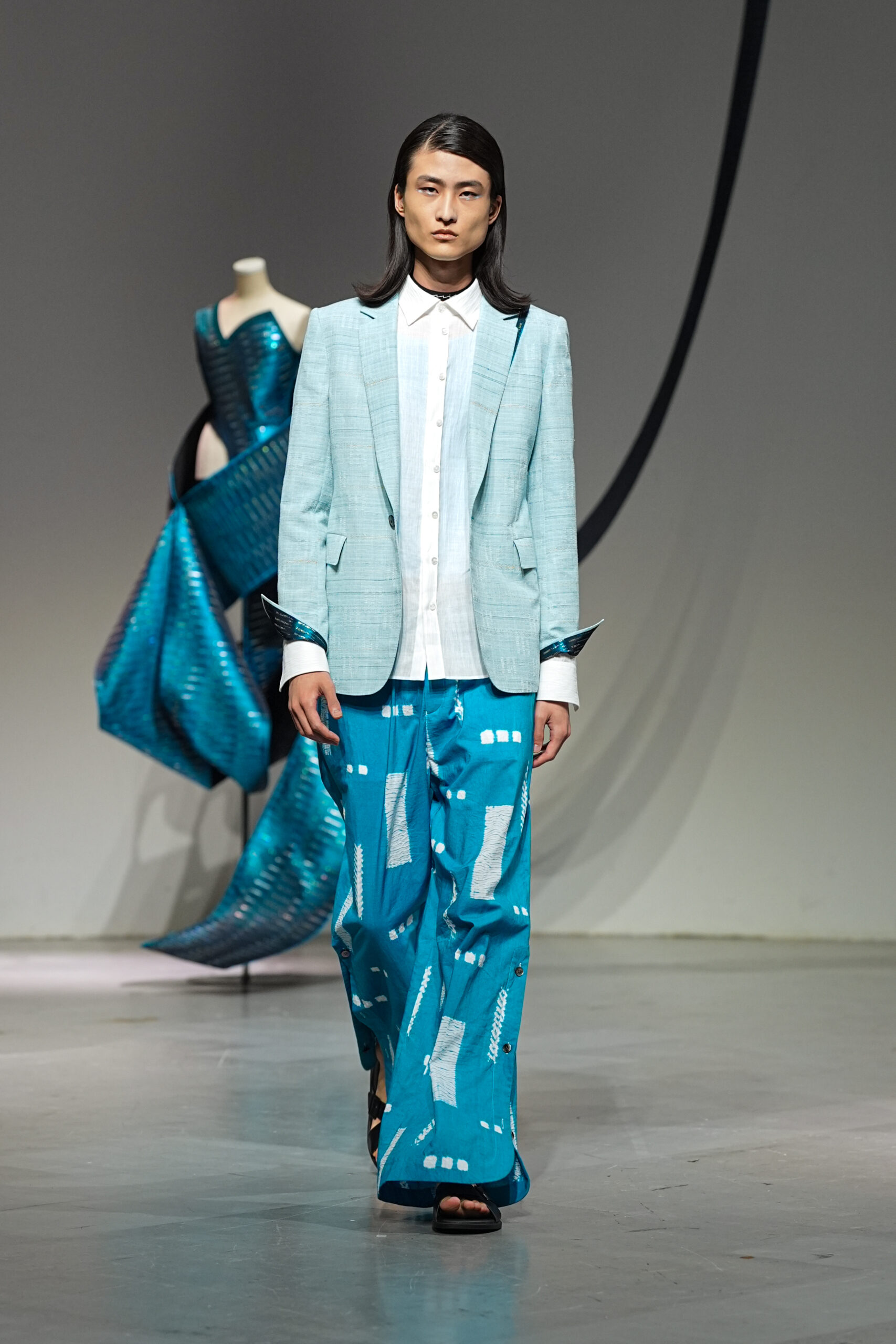
Until recently, we held tightly to kimono materials. We believed that devotion was what made MIZEN, MIZEN.
But taking part in Fashion Week this March changed that.
Is making Western clothing out of kimono fabric the only thing that makes something MIZEN?
No — our greatest goal was always to build a form of fashion that wears the values kimono carries.
And so, we freed ourselves from a constraint we had placed on our own shoulders.
We set out to express MIZEN through the fabric furthest from kimono.
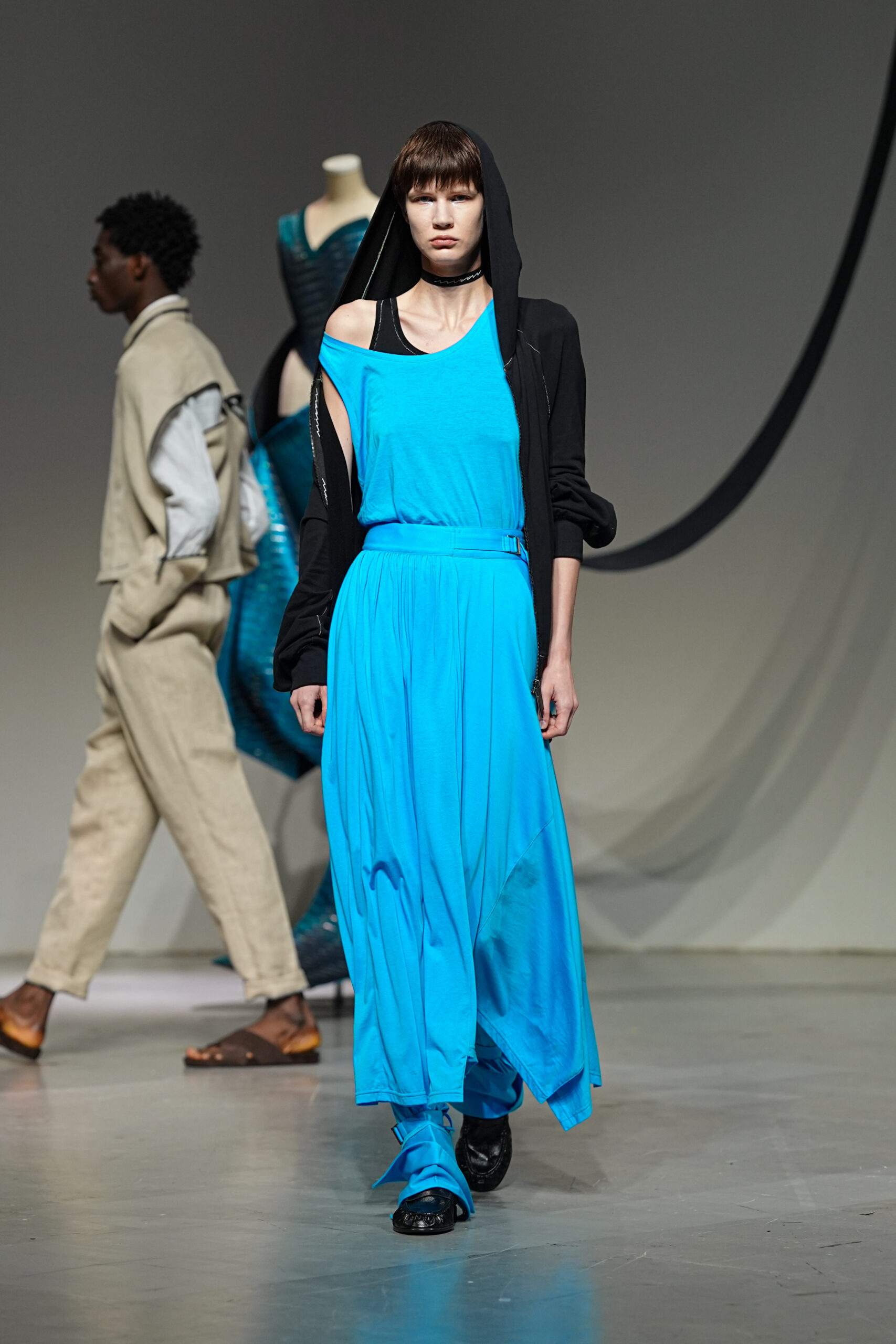
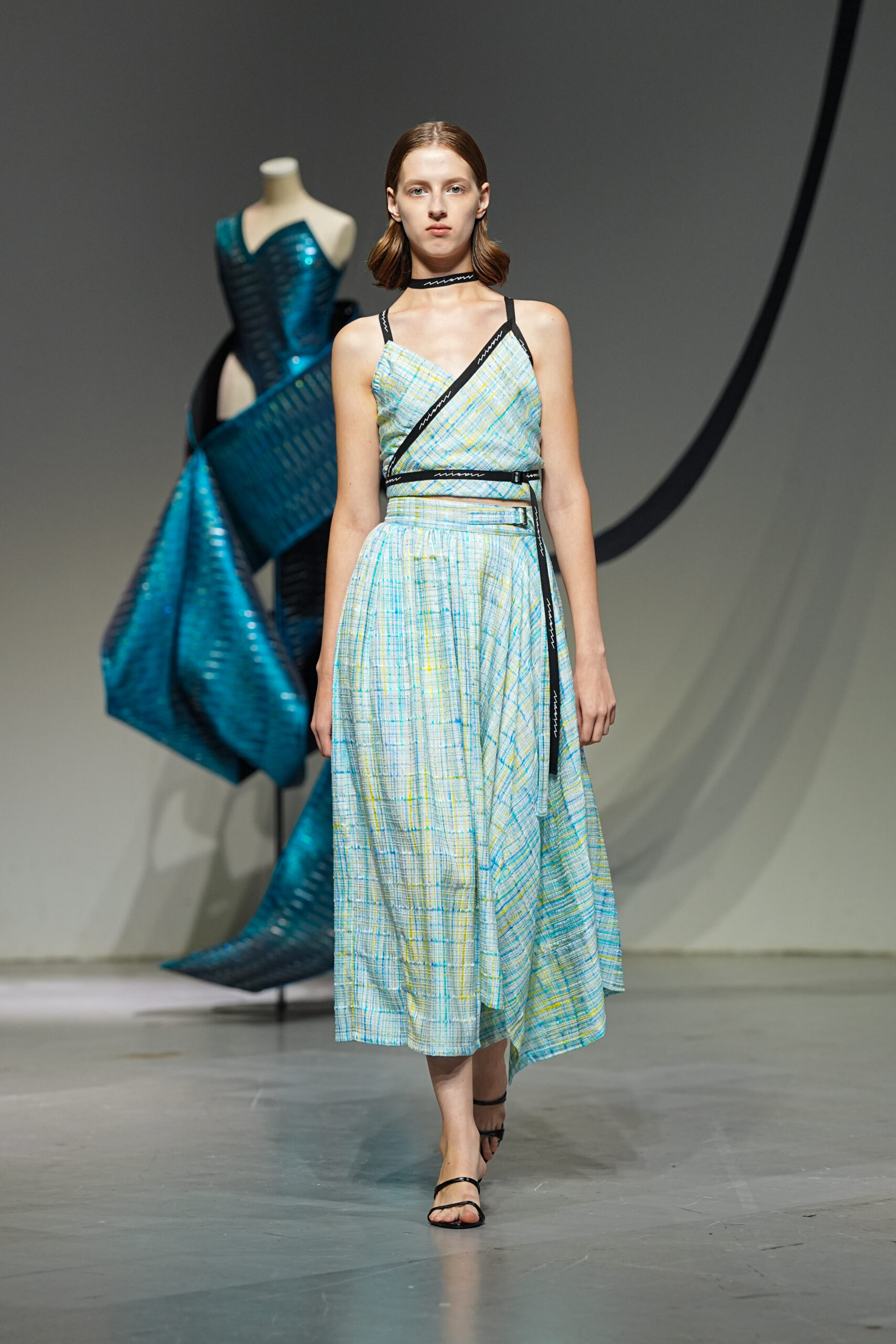
An overlock stitch is normally hidden — sewn on the reverse side of the fabric, just to keep a seam allowance from fraying.
Here, we used it as the seam itself, and dyed the thread using kasuri, a traditional Japanese technique that lets color blur and shift along a single thread.
The color shifts with every stitch, and the seam takes on a quiet ambiguity.
A technique for hiding, turned into a technique for revealing. Just as with kimono, it's the technique itself that takes center stage.
And so, as a construction spec for every fabric but kimono, "Loose Lock" was born.
Until recently, we held tightly to kimono materials. We believed that devotion was what made MIZEN, MIZEN.
But taking part in Fashion Week this March changed that.
Is making Western clothing out of kimono fabric the only thing that makes something MIZEN?
No — our greatest goal was always to build a form of fashion that wears the values kimono carries.
And so, we freed ourselves from a constraint we had placed on our own shoulders.
We set out to express MIZEN through the fabric furthest from kimono.
An overlock stitch is normally hidden — sewn on the reverse side of the fabric, just to keep a seam allowance from fraying.
Here, we used it as the seam itself, and dyed the thread using kasuri, a traditional Japanese technique that lets color blur and shift along a single thread.
The color shifts with every stitch, and the seam takes on a quiet ambiguity.
A technique for hiding, turned into a technique for revealing. Just as with kimono, it's the technique itself that takes center stage.
And so, as a construction spec for every fabric but kimono, "Loose Lock" was born.
That's the idea that came up one day in the atelier.
Our clothes tend to run pretty formal, so why not try making something as far from that as possible?
Lightweight Omi chijimi, or Kurume kasuri patterned with a charming "rising carp" motif — either felt just right for a pajama set.
But we still wanted a touch of MIZEN in there somewhere.
We wanted a design you could wear outside, too.
And that's how this style came to be.
Where does the "shirt-ness" of a shirt come from?
The flat-felled seam. A collar split into a stand and a leaf. A placket lined with small buttons and buttonholes. The chest pocket. The yoke. The back tuck that gives room to move. The cuffs. The sleeve placket opening...
An ordinary shirt is built entirely on vertical and horizontal seams.
So what happens when it's "Slash"?
A bolt of kimono cloth is only 38 centimeters wide — about a quarter the width of ordinary dress fabric.
In cloth this narrow, this insistently straight, the selvage — the fabric's own edge — can't help but announce itself. What goes unnoticed in a wide bolt becomes, here, the whole point.
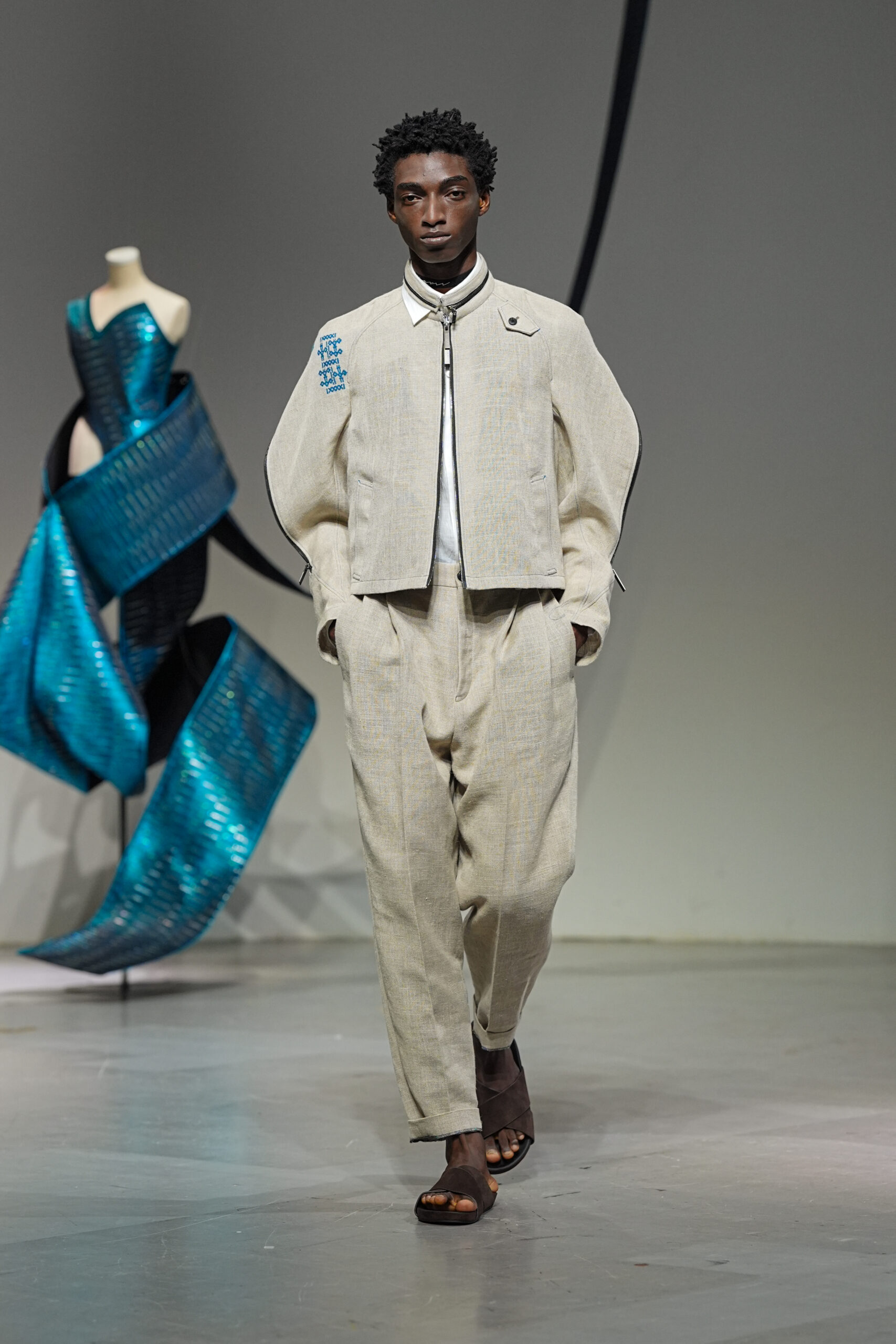
The diagonal line across the back was never planned. It's what happens when you keep a kimono fabric's straight grain intact while wrapping it around a body — a trace left behind, not a decision made.
We set the zipper to follow that same line, tracing the path the fabric's edge had already taken.
Design doesn't always come first.
Sometimes it's what you find after listening — closely — to the fabric's own edge.
This piece belongs to the same lineage as the Slash series.
Where Slash begins at the right front panel, this one begins at the back.
On the back sits kogin-zashi embroidery, worked in a bright, summer-appropriate color chosen to match this season's "Ascending" theme.
From there, we let the kimono's selvage flow left and right across the back, and simply accept the line that results. That method hasn't changed.
Only one thing worried us: how that line would enter the sleeve.
The human body isn't built from straight lines — and where bodice meets sleeve, curve meets curve, so the smallest shift in the angle of that horizontal line can change the outcome dramatically.
Even so, it came together more beautifully than we expected.
The collar, too, has a horizontal cut, opening up styling possibilities it never had before.
All told, this is one of our favorite pieces this season.
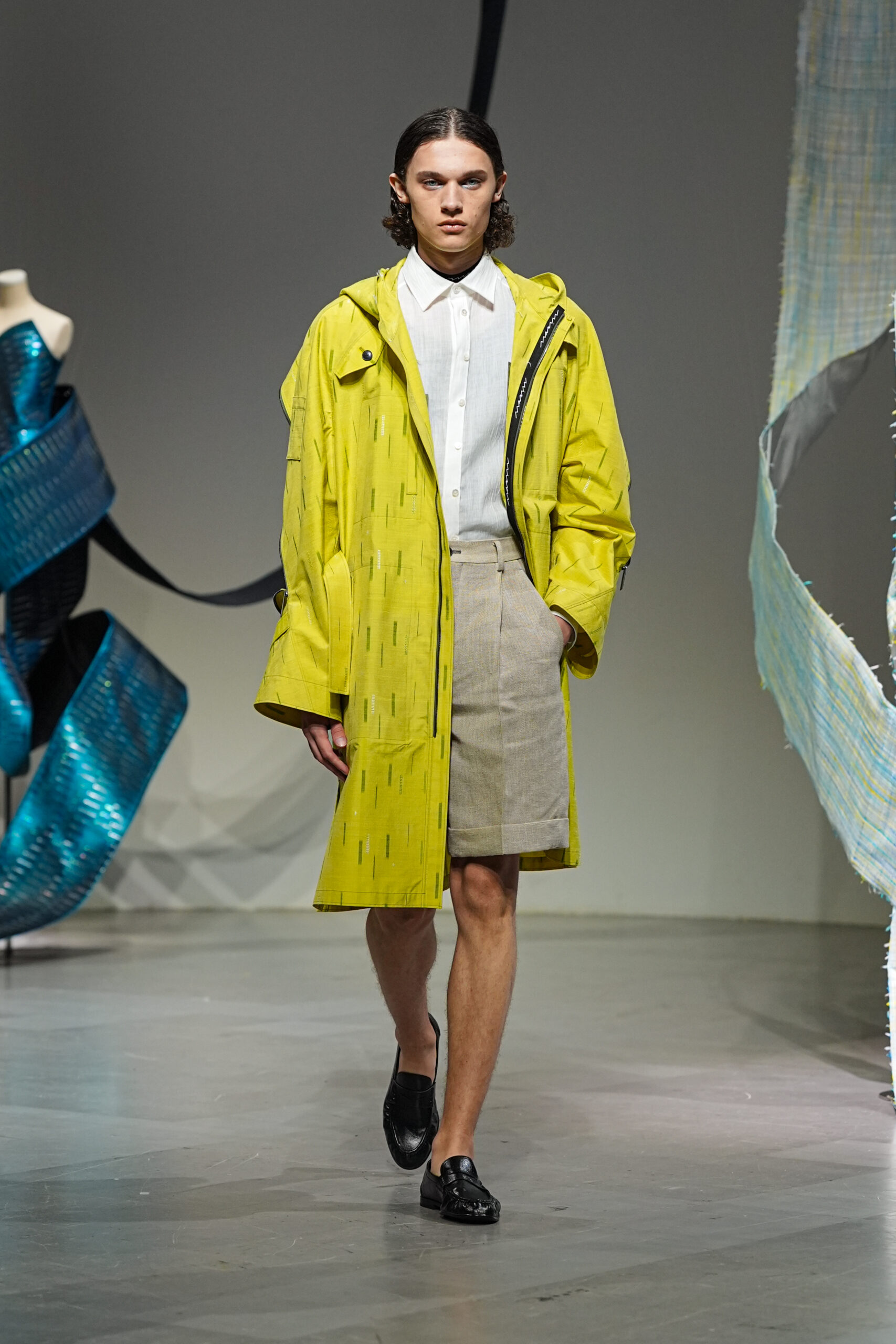
Kimono fabric tends to carry an image of something luxurious, something formal.
Haebaru hanaori is perhaps the epitome of that.
Which is exactly why we wanted to make something sporty, something military, out of it.
The idea began with Horizon's own structure — a straight line running across the back.
When we deliberately emphasized that line with a zip, it instantly took on a military air.
So why not go all the way, and add a hood — a first for MIZEN.
Kimono and parka.
The pleasure of bridging two things this far apart is, without question, part of what it means to create with kimono fabric.
By the way: the back zip has four sliders, opens freely at two points, and runs about 135 centimeters — made entirely to order.
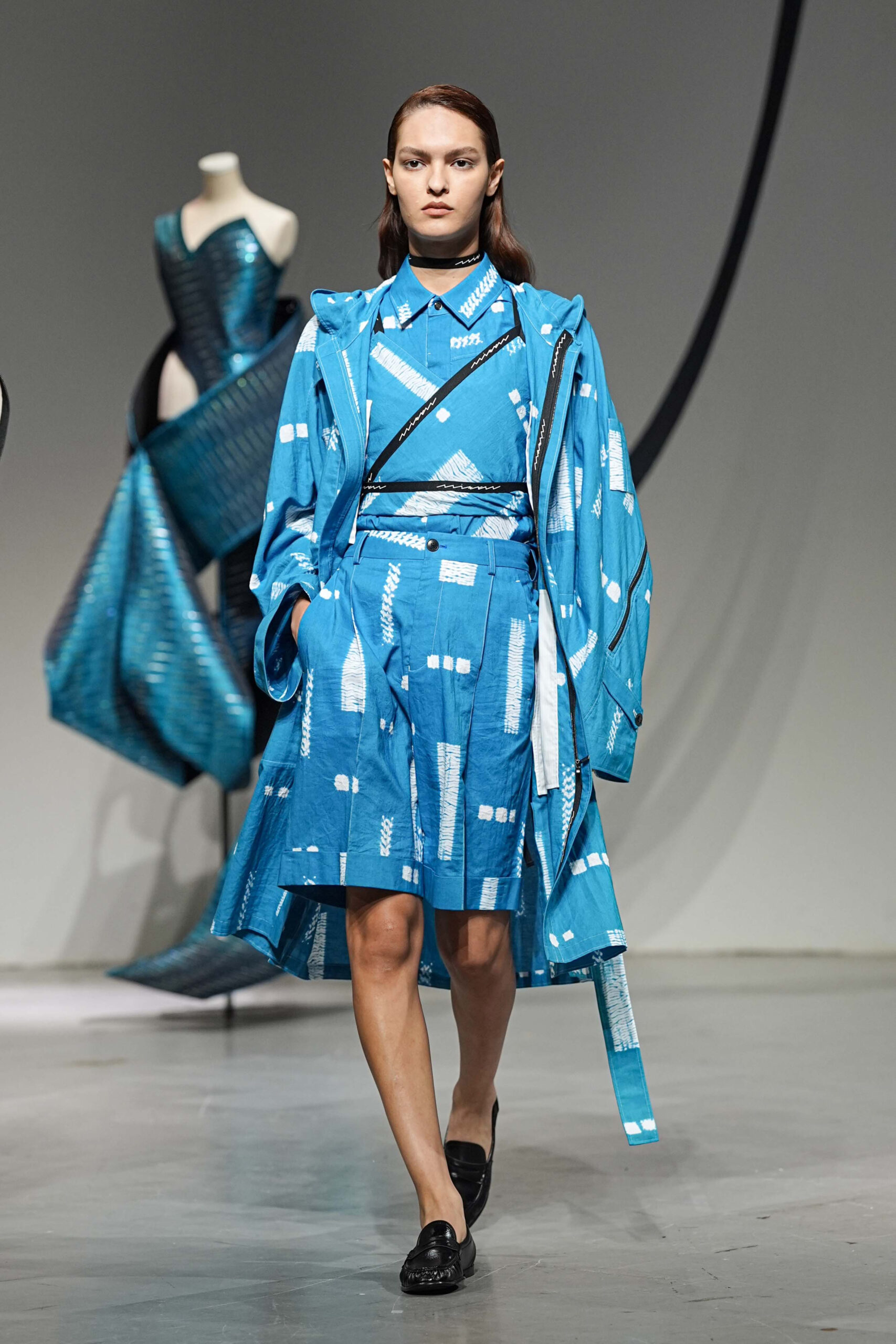
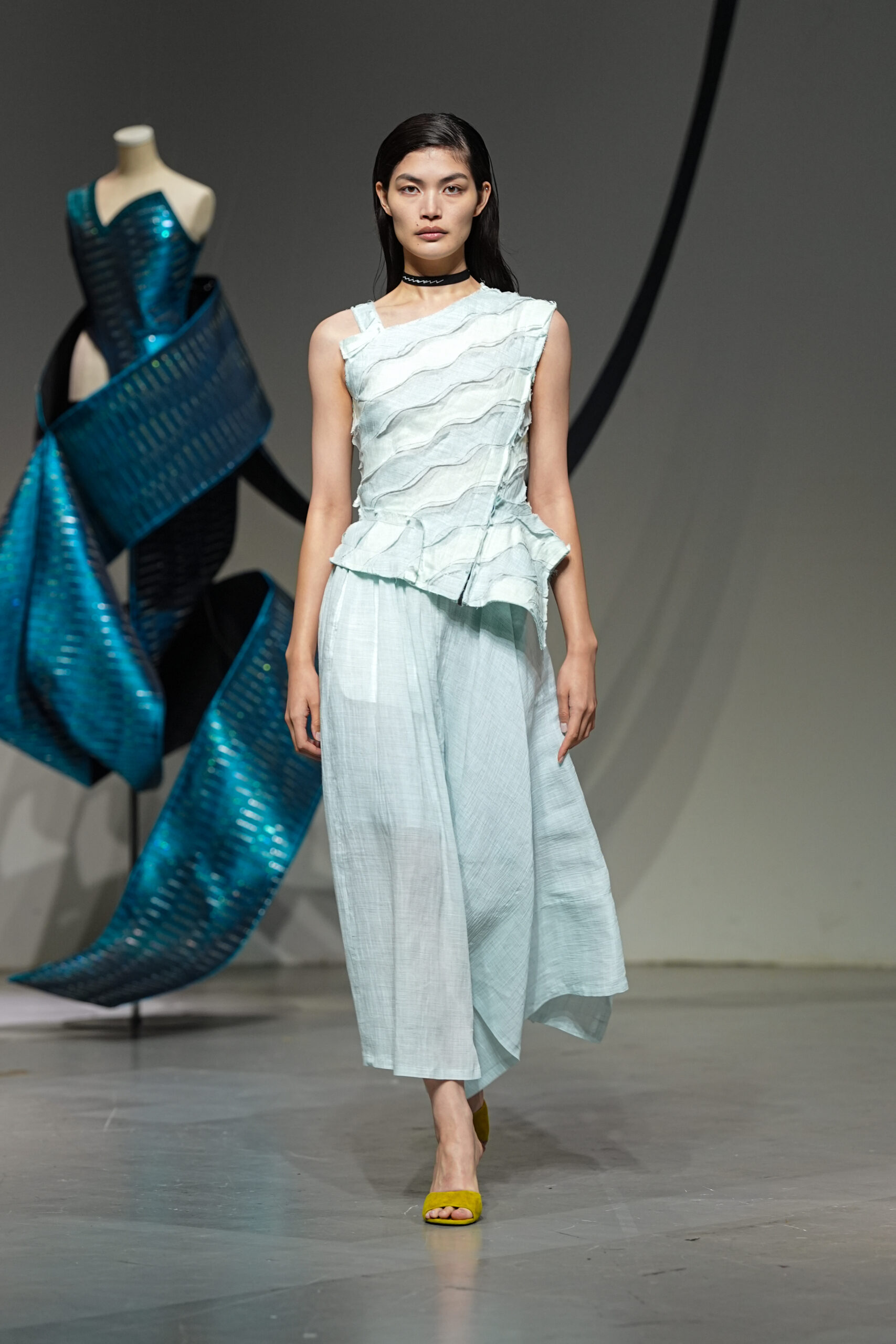
One of this season's textile themes is Tatewaku — a traditional Japanese wave pattern. It's a simple motif: the same curve, shifted by half and repeated side by side. But cut along that curve, and something interesting happens — every adjacent piece is exactly the same shape.
That means two differently colored fabrics can be joined edge to edge, alternating, without the pattern ever breaking step — and without a scrap of waste, extending the width as far as needed.
So we cut our original two-tone Omi chijimi along this pattern and pieced the panels together, alternating colors, to build the base fabric for this top. The chijimi itself is thin and prone to slipping at the seams — but layering and joining it this way also gives it strength. Two problems solved at once.
A small technique, added to a fabric that can otherwise feel monotonous, creates new value. This, too, is one of MIZEN's crafts.
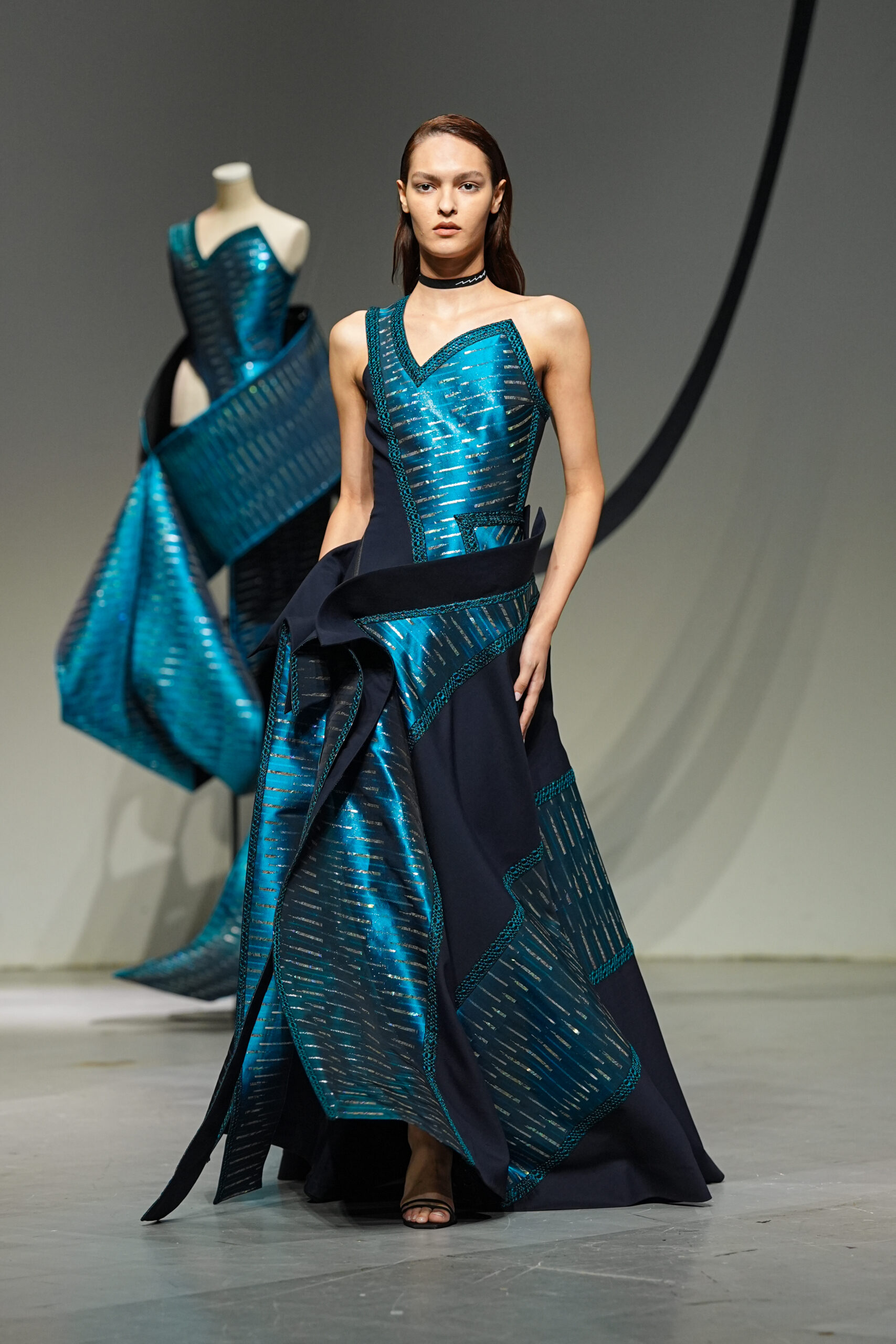
Our first encounter with raden weaving was in February 2016, at Première Vision in Paris.
"There's a company in Japan that weaves seashells," an acquaintance told me.
I remember not quite believing it.
They shave shellfish shell paper-thin, cut it by hand into the shapes of a pattern, and paste it onto washi paper. That washi is then cut into narrow strips and woven into silk as the weft — becoming, in the end, a single length of luxury obi.
I was struck that handwork like this still survives in Japan, even now.
And I had an instant conviction: this material was never meant to stay confined within the world of kimono.
That conviction hasn't changed since.
That's why this dress took the stage —
as a symbol of Japanese craftsmanship.
Enjoying the Margin ─The Story Behind─